Projects
UX Design
Ani

Overview
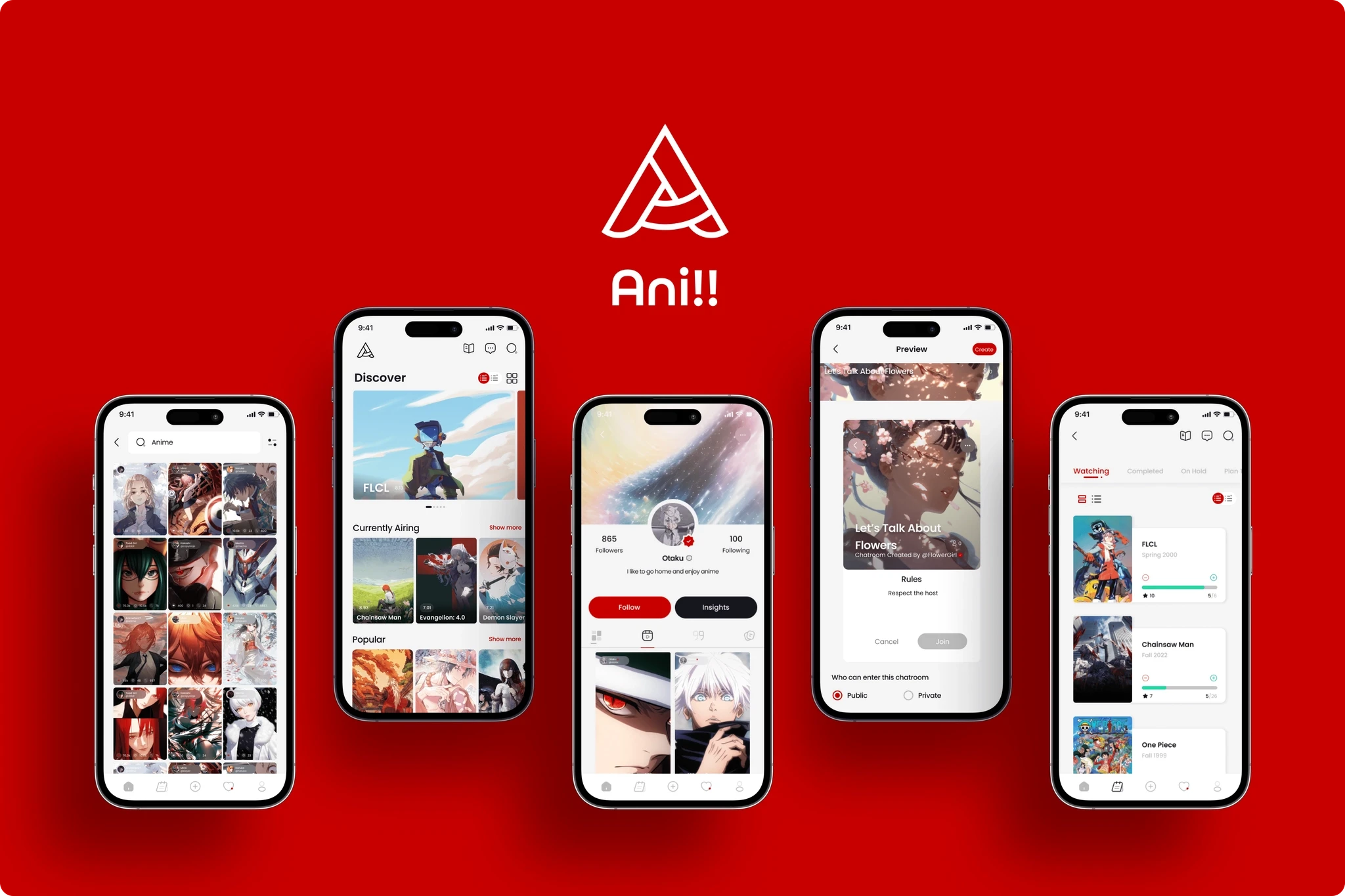
As the founding designer at Ani, I led product design from the ground up, shaping the vision for an animanga social platform focused on discovery, tracking, and community. Starting from zero, I defined the user experience and established a scalable design system to support rapid iteration and long-term growth. I worked closely with engineering to ensure designs translated seamlessly into production, aligning on shared patterns and priorities early. This foundation enabled us to move quickly, launching an MVP that reached 10K+ downloads in the first month and validated early product-market interest.
Role
Founding Designer
Project Type
Social Media
Project date
2022
project Goal
Driving 0 → 1 product design, shaping vision, UX strategy, and system architecture.

The Approach
To support rapid iteration during Ani’s early development, I introduced slot-based component patterns that allowed content to adapt across different features while maintaining structural consistency. This reduced the need for one-off components and enabled faster design exploration as the product evolved. As the system matured, I refactored more complex components to better support scalability and align with long-term product needs.
The Discovery
As a 0 → 1 product, Ani required building a deep understanding of user needs from the ground up. I led a focused 4-week discovery sprint to identify behaviors, motivations, and gaps in the current animanga ecosystem. To understand how users currently track, discover, and engage with content, I conducted: 20+ user interviews with animanga fans across varying levels of engagement In-depth analysis of community platforms including Reddit, Discord, and niche forums Competitive and adjacent product analysis, mapping strengths, gaps, and opportunities through a SWOT framework This research helped uncover unmet needs around fragmented discovery, inconsistent tracking tools, and limited community-driven experiences—informing the foundation of Ani’s product direction.
Design Process
The design process focused on aligning the platform to LD3.5 while supporting complex, data-driven workflows like scheduling. I leveraged existing system components where possible, extending them to accommodate high-density information and real-time decision-making needs.
Given the complexity of workforce planning, I prioritized clarity and efficiency structuring the experience to surface the most relevant information at the right time. This included designing modular layouts, scalable components, and clear interaction patterns that could support evolving use cases.
I also worked closely with product and engineering to integrate Sidekick, Walmart’s AI assistant, directly into the workflow. Rather than treating AI as a separate feature, I focused on embedding it contextually ensuring it supported decision-making without disrupting the user’s flow.
This iterative approach allowed us to balance system consistency, technical feasibility, and user needs while delivering a cohesive and scalable experience.
Sitemap & User Persona
Research revealed a core audience of highly engaged animanga fans seeking better ways to track, discover, and connect over shared interests. While many existing platforms supported content consumption, they lacked meaningful social interaction and community-driven experiences. I developed personas to capture these behaviors and motivations, using them to guide key product decisions. These insights directly informed the sitemap, prioritizing features like list management, discovery, and community engagement as core user flows.

Wireframing
I used low-fidelity wireframes to quickly define structure, align with engineering on scope, and prioritize features for the MVP. This enabled rapid iteration and informed tradeoffs to meet launch timelines. Below are sample onboarding flows.

Colors
I designed Ani’s color system to balance expressive branding with functional clarity. Drawing inspiration from animanga aesthetics, the palette brings energy to the experience while maintaining accessibility and readability across core flows. Colors were implemented through a token-based system, enabling consistent application across components and supporting scalability as the product evolved.


Typography
Typography was designed to support clarity and hierarchy across Ani’s core experiences, from content discovery to list management and community interactions. I selected a modern, highly readable type system that performs well across dense information and varied screen sizes. A clear typographic scale was established to guide hierarchy and ensure consistency across components, making it easier for users to scan content and navigate the platform efficiently.


The Result
Building Ani from 0 → 1 reinforced the importance of balancing speed with long-term scalability. While the MVP successfully validated early product-market interest, it also surfaced opportunities to further refine onboarding, improve content discovery, and deepen community engagement. One key learning was the value of establishing system foundations early. Investing in a scalable design system enabled faster iteration as the product evolved, but also highlighted areas where additional structure and documentation would improve cross-team adoption. Moving forward, I would focus on refining engagement loops, expanding personalization, and strengthening the connection between content discovery and community interaction to drive sustained growth.
Reflection & Next steps
Building Ani from 0 → 1 reinforced the importance of balancing speed with long-term scalability. While the MVP successfully validated early product-market interest, it also surfaced opportunities to further refine onboarding, improve content discovery, and deepen community engagement. One key learning was the value of establishing system foundations early. Investing in a scalable design system enabled faster iteration as the product evolved, but also highlighted areas where additional structure and documentation would improve cross-team adoption. Moving forward, I would focus on refining engagement loops, expanding personalization, and strengthening the connection between content discovery and community interaction to drive sustained growth.


More Projects


