Projects
UX Design
Walmart

Overview
Designed an end-to-end mobile time tracking experience for field technicians, replacing manual workflows with a real-time, digital solution. Enabled seamless activity tracking, work order management, and daily clock-in/out—reducing confusion and improving operational efficiency.
Role
Senior UX Designer
Project Type
End-to-End Product Design · Enterprise UX
Project date
2024
project Goal
Transform manual, paper-based time tracking into a real-time, mobile experience that allows technicians to manage travel, work orders, and activities seamlessly throughout their day.

The Approach
Given the tight timeline and project handoff, I focused on quickly aligning on priorities and establishing a clear path to delivery. The work had been delayed due to team changes, so I stepped in to bring structure and momentum to the project. I prioritized defining the end-to-end technician workflow ensuring core actions like starting travel, managing work orders, tracking time, and clocking out were clearly supported. Rather than over-designing, I focused on delivering a streamlined, usable experience that could be implemented quickly. Working closely with a distributed team across time zones, I collaborated daily with product and engineering to validate decisions, unblock progress, and ensure alignment. This iterative approach allowed us to move quickly through tight sprints and successfully deliver the experience within the required timeline.
Discovery
To ground the experience in real-world workflows, I conducted on-site field research by observing technicians throughout their day. This provided direct insight into how they managed travel, work orders, and time tracking in a manual, often fragmented process. I identified key pain points around inconsistency, lack of real-time visibility, and frequent context switching especially when technicians needed to adjust activities on the fly. These insights informed the design of a mobile-first solution that could support dynamic, in-field workflows, enabling technicians to track time, manage tasks, and update their status in real time.
Design Process
The design process focused on aligning the platform to LD3.5 while supporting complex, data-driven workflows like scheduling. I leveraged existing system components where possible, extending them to accommodate high-density information and real-time decision-making needs.
Given the complexity of workforce planning, I prioritized clarity and efficiency structuring the experience to surface the most relevant information at the right time. This included designing modular layouts, scalable components, and clear interaction patterns that could support evolving use cases.
I also worked closely with product and engineering to integrate Sidekick, Walmart’s AI assistant, directly into the workflow. Rather than treating AI as a separate feature, I focused on embedding it contextually ensuring it supported decision-making without disrupting the user’s flow.
This iterative approach allowed us to balance system consistency, technical feasibility, and user needs while delivering a cohesive and scalable experience.
Lofi wireframing
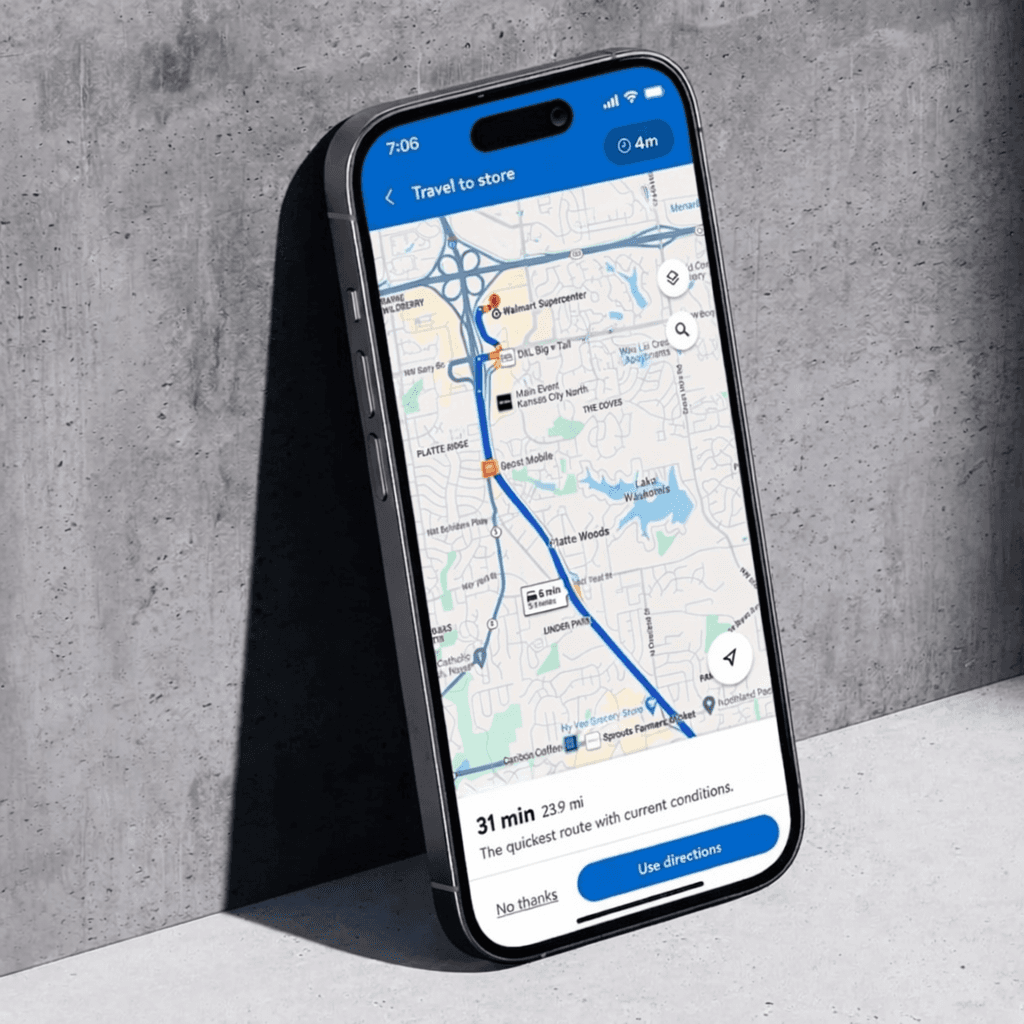
To support rapid iteration, I used low-fidelity wireframes to quickly define and validate the end-to-end experience. This allowed the team to align on core workflows and make fast decisions within tight sprint timelines. A key part of the experience was enabling technicians to understand their day at a glance. I integrated a map-based view using Google Maps APIs to visualize travel routes and store locations, giving technicians clear visibility into where they needed to go throughout the day. This approach helped bridge planning and execution—allowing technicians to navigate their workload more efficiently while reducing uncertainty in the field.

The Result
The best news I've heard recently within Walmart is that we have an 80% adoption rate within the United States and 30% in our Mexico and Canadian stores. This project reinforced the importance of execution under constraint—balancing speed, scope, and quality while aligning across product and engineering. Stepping into a delayed initiative, I had to quickly establish direction, prioritize core workflows, and drive momentum to meet delivery timelines. A key takeaway was the value of designing from real-world context. Observing technicians in the field highlighted the need for flexibility and real-time adaptability, which became central to the experience. I also learned how to effectively leverage design systems to accelerate delivery while maintaining consistency and stakeholder alignment. Looking ahead, I would focus on enhancing automation, improving system intelligence around task management, and further optimizing the experience to support long-term efficiency and scalability.

Reflection & Next steps
The best news I've heard recently within Walmart is that we have an 80% adoption rate within the United States and 30% in our Mexico and Canadian stores. This project reinforced the importance of execution under constraint—balancing speed, scope, and quality while aligning across product and engineering. Stepping into a delayed initiative, I had to quickly establish direction, prioritize core workflows, and drive momentum to meet delivery timelines. A key takeaway was the value of designing from real-world context. Observing technicians in the field highlighted the need for flexibility and real-time adaptability, which became central to the experience. I also learned how to effectively leverage design systems to accelerate delivery while maintaining consistency and stakeholder alignment. Looking ahead, I would focus on enhancing automation, improving system intelligence around task management, and further optimizing the experience to support long-term efficiency and scalability.

More Projects


